Throughout the entirety of January my time was dedicated to assisting with the AW25 Main outfitting, with a particular focus on menswear. This involved collaborating closely with a team of photographers, models, freelance stylists and Anna the production placement student. Together, we created detailed styling sheets that will be essential references for the brands upcoming e-commerce shoots.
The styling days for AW25 was a long process due to a large amount of samples, that involved a team of freelance stylists preparing and planning looks for each individual sample within the AW25 Main collection. The team would generally focus on one collection at a time but depending on the number of stylists available and the amount of work, they sometimes worked on multiple collections simultaneously. They would utilise racking to carefully hang the clothes in a way that allowed them to visualise the entire outfit as a cohesive look, ensuring the accessories, shoes and layers were all properly accounted for. Once the looks were done, the next step for the freelancers was to photograph each outfit for reference.
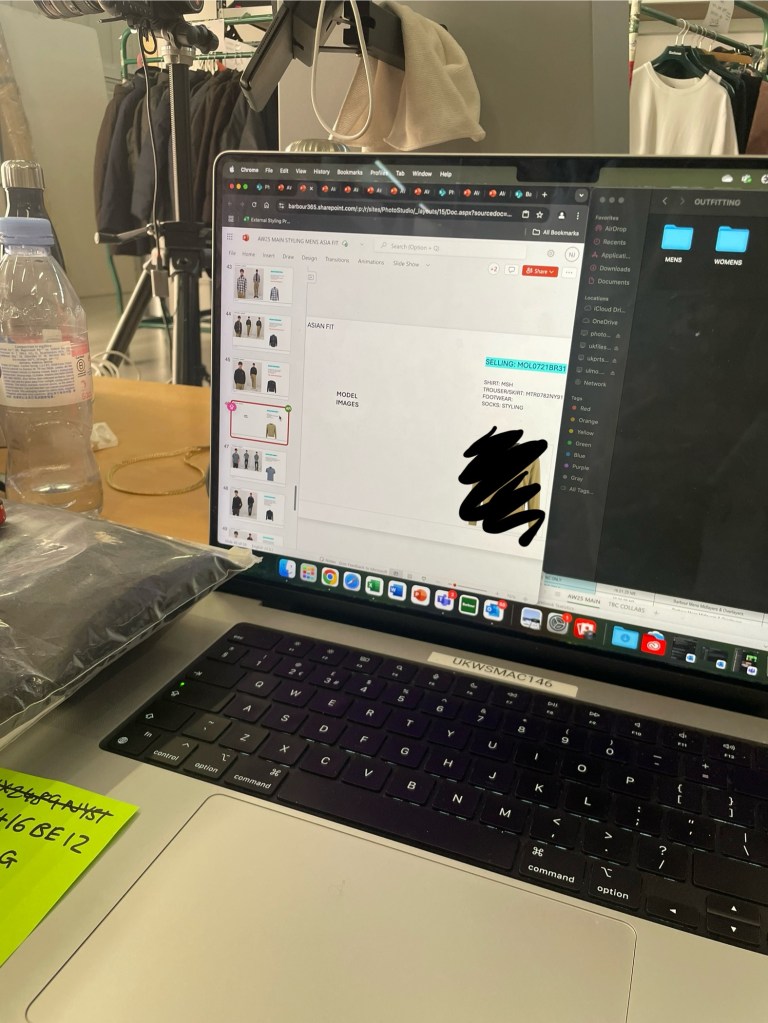
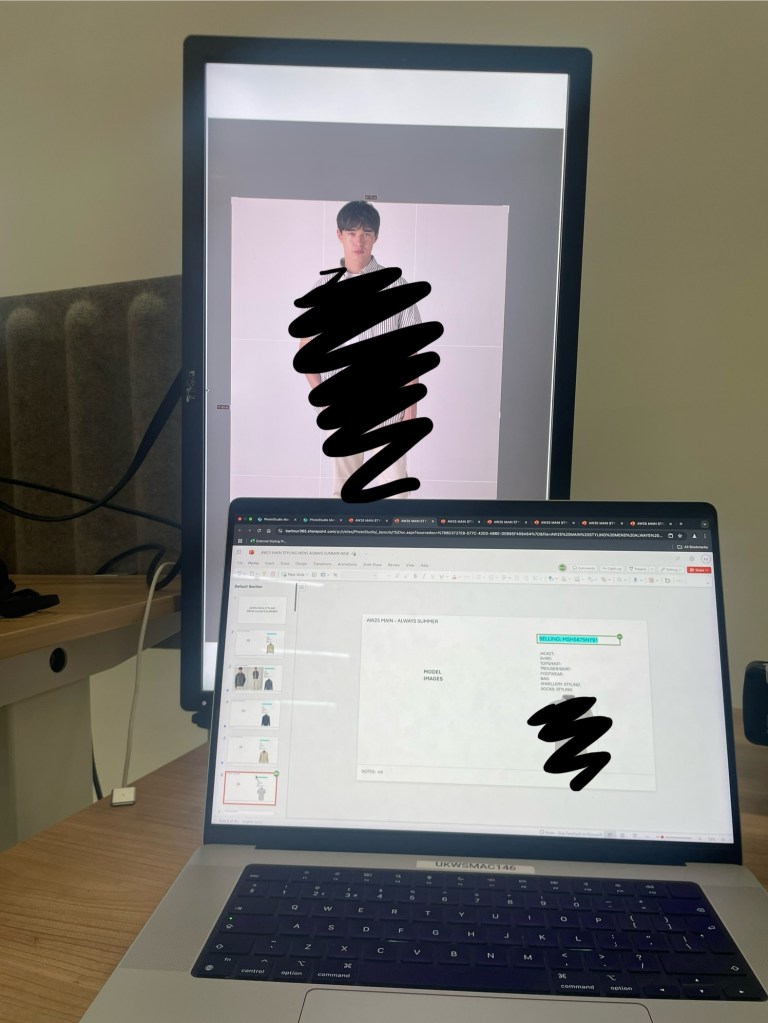
When they had gathered enough looks, the next part of the process was shooting the looks on models. We had a total of around eight models, including four males and four females, a few of them being new to working for Barbour. While the photographer was exporting the images into a specific folder for easy access, I would immediately start adding these photos to the styling decks. There’s a deck for each collection, and within each deck, I would ensure there was a dedicated slide for each individual sample. My job was to ensure that the images were placed on the correct slides corresponding to the selling sample of the look in the image, and I would also add all necessary written details. This included specifying key details such as the primary selling piece, which for example could be a knitted jumper, I would note down what trousers, underlayer, jacket (if there was one), footwear, and accessories were paired with it. If the items were Barbour, I would reference their specific product codes, and for items sourced externally from brands like ASOS, COS, H&M, or other retailers, I would make sure to note this down as well.
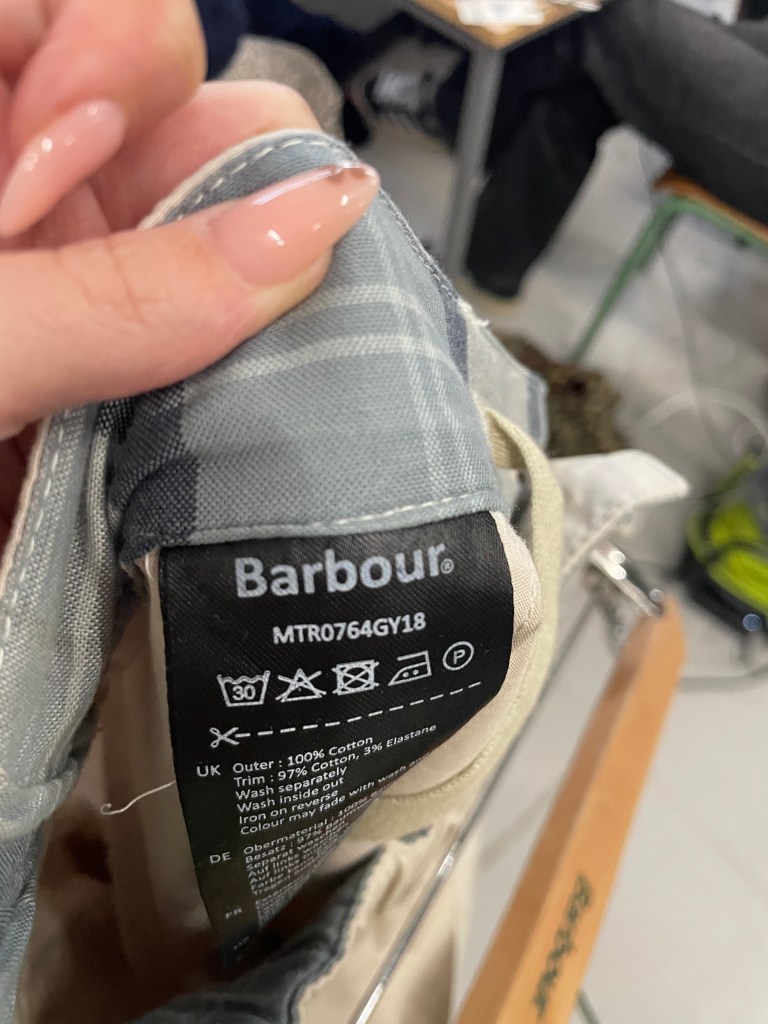
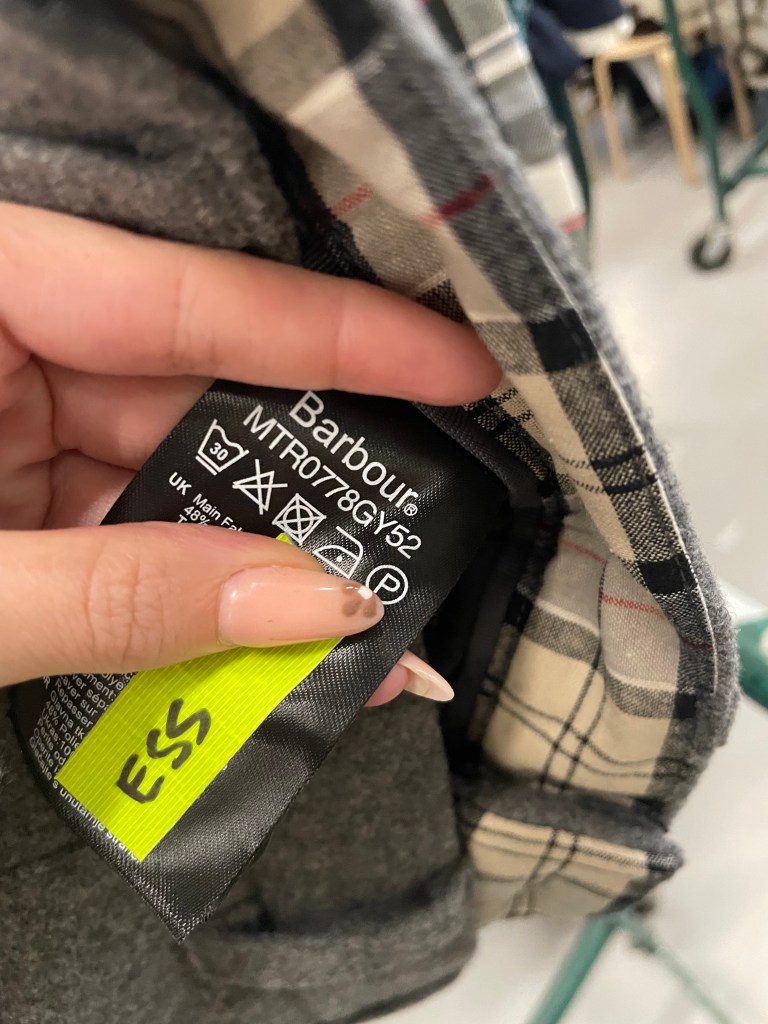
Throughout this process, it was essential to remain vigilant and ensure we weren’t photographing anything that had already been dropped or was noted as a carry-forward sample. To stay organised and on track we would constantly cross-reference our work with the range plan, ticking off codes to ensure that everything was accounted for, up to date and aligned with what we were doing. This meant that the styling days ran as smoothly as possible and that each sample was well documented for future reference.
 Styling at Barbour